
Tree Removal · San Bernardino County
When CAL FIRE Inspects, Your Pines Can't Wait
Running Springs sits inside the San Bernardino National Forest and that means every tree on your property is a legal responsibility, not just a landscaping choice. We handle tree removal for homeowners who can't afford to wait.

Planning in Running Springs
The address matters before the estimate does.
This page is part of our San Bernardino County service area. A town name alone does not decide the permit, inspection or construction requirements: the project address, jurisdiction and written scope do.
That is why the first useful step is a walkthrough of the property—not a generic price attached to a ZIP code.
- Town
- Running Springs
- Service region
- San Bernardino County
- Project type
- Tree Removal
- Building review
- Confirmed for the project address
Hazard Tree Removal, Running Springs CA
Less Risk on Your Property, More Peace of Mind
Living at 6,000 feet inside the San Bernardino National Forest is genuinely beautiful until a beetle-killed ponderosa starts leaning toward your roof, or CAL FIRE shows up for a defensible space inspection and your property isn’t ready. Tree removal isn’t a home improvement luxury up here. It’s a compliance issue, a safety issue, and in the aftermath of the 2024 Line Fire, it’s something Running Springs homeowners are taking a lot more seriously.
When a hazard tree comes down the right way, you stop worrying every time the wind picks up on SR-18. You’re no longer watching that dead cedar from the kitchen window wondering if this is the winter it finally goes. And if you’ve got a CAL FIRE inspection notice with a deadline, getting the tree removed means you don’t face fines that can run up to $20,000 per violation under California Public Resources Code §4291.
For cabin owners and short-term rental operators who aren’t up the mountain every week, the outcome is even more specific: your property is no longer a liability you can’t monitor. One call, one visit, and the hazard is gone along with whatever else it might have damaged on the way down.
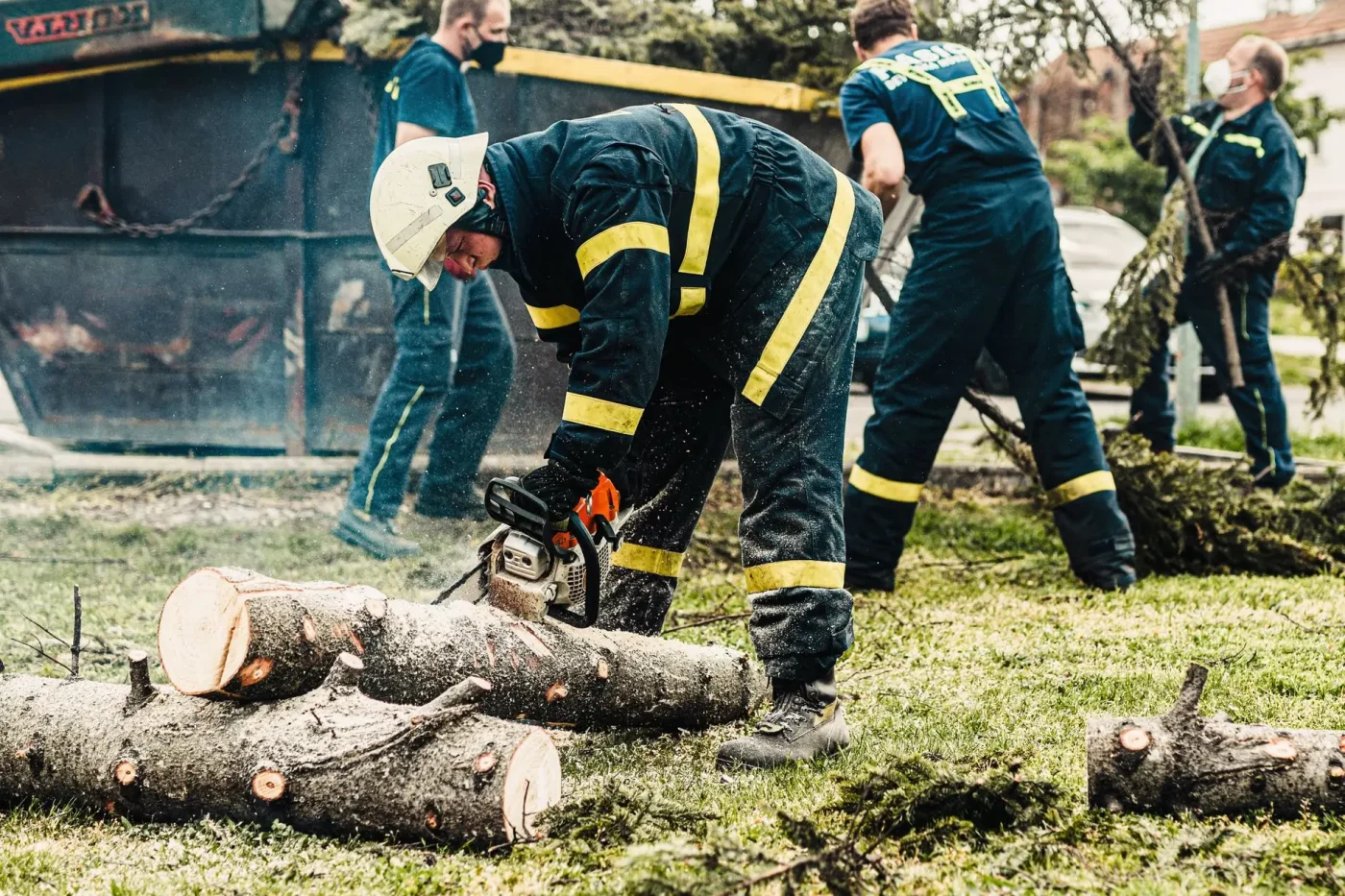
A clearer tree removal scope
Define the project before comparing the price.
These are the questions the written proposal should answer. The exact solution still depends on what is found at the property.
Existing conditions
Record what is there now and what must be protected or repaired.
Scope and materials
Name the work, selections, allowances and exclusions in writing.
Approvals and schedule
Confirm the permit path, sequence and dependencies before work starts.
Licensed Tree Removal Contractor, Running Springs
One Contractor for the Tree and Everything It Hits
We’re a licensed general contractor (CSLB License #1105333) serving San Bernardino County, CA, including the mountain communities along SR-330 and SR-18. That license number is public record you can verify it in about 60 seconds at cslb.ca.gov. In a market where unlicensed operators show up after every storm and every fire evacuation, that’s not a small thing.
What makes us different in a community like Running Springs isn’t just the license. It’s the scope. A falling pine doesn’t usually just fall it takes out the fence, cracks the deck, and sometimes finds the roof. Most tree services stop at the tree. We handle roofing, stucco, fencing, and exterior repairs as part of the same job. Whether you’re a year-round resident in the Nordic Tract or a cabin owner who manages the property from the valley, that means one call instead of three.
We’ve also been featured on KCAL television the same station most Inland Empire and LA-area property owners watch. That kind of visibility means there’s a real reputation behind the work.
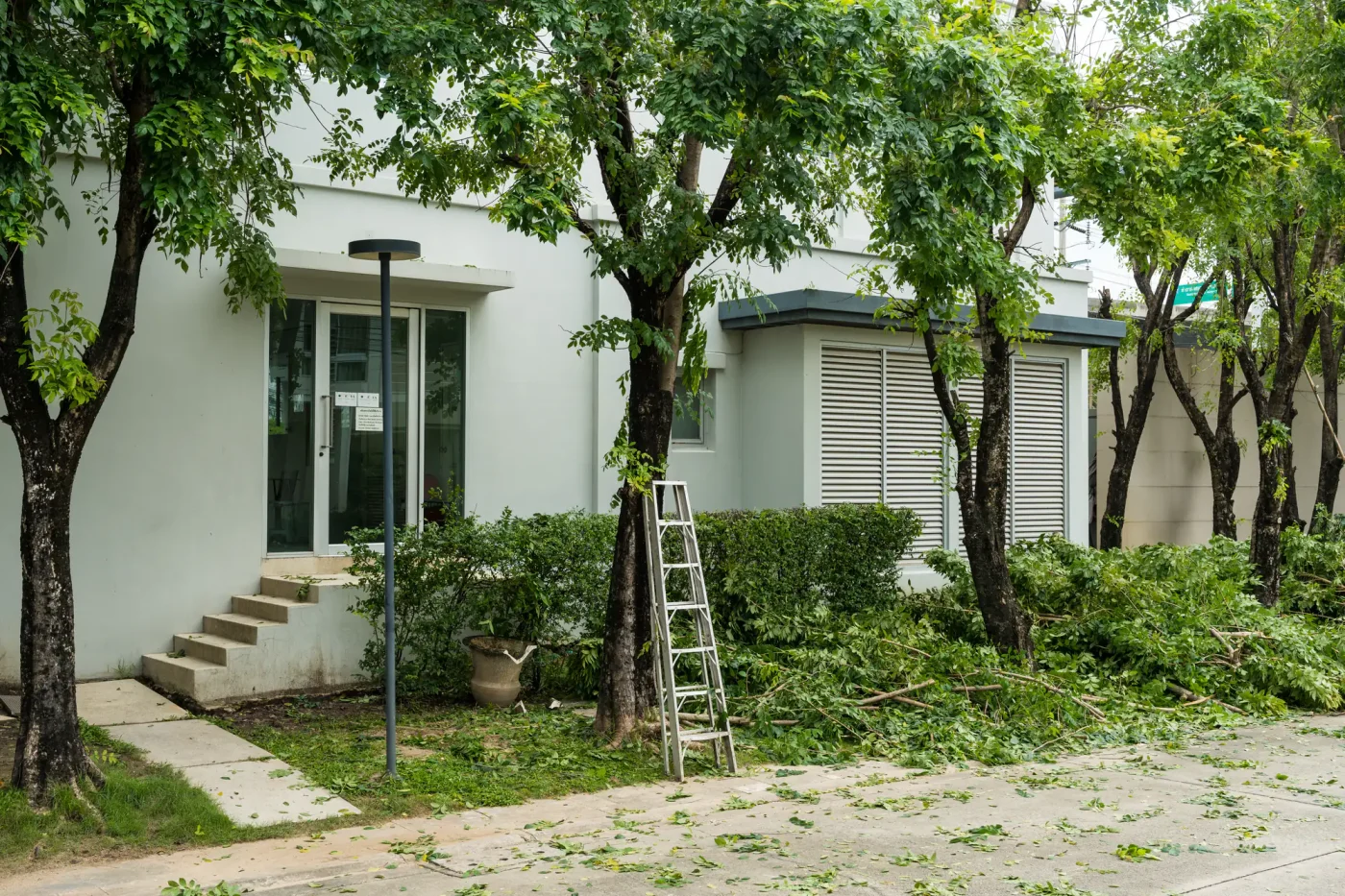
From walkthrough to written scope
Three decisions before construction starts.
- 01
Walk the property.
Review the existing condition, access and the result you want at the actual address.
- 02
Write the scope.
Name the work, materials, exclusions, permit responsibilities and sequence in one document.
- 03
Attach the price.
The estimate belongs to that exact scope, so you can compare the job—not only the number.
Tree Removal Process, Running Springs CA
From the First Call to a Clean Property
It starts with a free estimate. Someone comes out to the property, looks at the tree, assesses what’s involved size, location, proximity to structures, access constraints and gives you a clear number before any work begins. For Running Springs properties, that assessment includes checking access via the driveway or lot, since steep or narrow cabin lots can affect how the removal gets done and what equipment makes sense.
Once you approve the estimate, we handle permits early. San Bernardino County, CA requires a permit for any tree removal within a county-maintained road right-of-way, and as a State Responsibility Area under CAL FIRE jurisdiction, there are specific defensible space standards that apply to how trees near structures get cleared. We handle the permitting side so you’re not chasing paperwork while a hazard tree sits on your property.
The removal itself follows a planned sequence the tree comes down in sections when needed, debris gets cleared from the site, and if there’s stump grinding required, that gets addressed as part of the job. If the tree damaged anything on the way down (a fence, a section of roofing, exterior stucco), we can assess and quote that repair in the same visit. When the job is done, the property is clean and the work is documented. Financing is available if the scope of work is larger than expected no reason to delay a hazard removal because of cost.

Tree Removal Services, San Bernardino Mountains
Built for Mountain Properties, Not Valley Lots
Tree removal in Running Springs is genuinely different from tree removal in a flat Inland Empire suburb. The dominant species here ponderosa pine, incense cedar, black oak, white fir are large-canopy trees that can reach significant height and spread. When they’re healthy, they’re the reason people buy property up here. When they’re beetle-damaged, storm-stressed, or fire-weakened, they’re a structural hazard that doesn’t announce when it’s going to fail.
The bark beetle epidemic that California declared a state of emergency over in 2003 specifically named Running Springs as an affected community. That damage didn’t stop beetle-killed standing dead trees remain a documented hazard throughout the San Bernardino National Forest inholding. If you have trees on your property that show signs of infestation (pitch tubes on the bark, sawdust-like boring dust at the base, fading canopy), those are removal candidates before they become emergency removals.
For properties in Arrowbear Lake, the Nordic Tract, or anywhere adjacent to the National Children’s Forest, defensible space compliance under PRC §4291 is the baseline not an optional upgrade. CAL FIRE requires up to 100 feet of clearance around habitable structures in this SRA zone. We work through that assessment with you, handle the removal, and can address any collateral damage to fences, decks, or exterior walls. Financing is available, and a 15% Off Coupon applies to the job.

Reviews from San Bernardino County homeowners
Every one of them is public, and every one is on Google
None of these are from Running Springs specifically, and they are not presented as if they were. They are the whole public record, linked so you can check it.
Steve Cowens
2026-03-11
My wife and I called Jerome directly at Socal Home Improvement. I heard him on KJLH Radio, Station advertising his business. When calling him, he set up an appointment to come out the same day, which was outstanding perfect. I must say on his arrival he was very professional and knew his job very well…
Rewa Cooper
2026-05-15
We recently completed a 6-week renovation with Jerome’s So Cal, and we couldn’t be happier with the results. As with any renovation, there were a few ups and downs along the way, but every concern we brought to their attention was addressed quickly and professionally…
jacqueline wright
2026-03-27
My Jerome’s SoCal Home Improvement experience was great. He remodeled my two bathrooms and I was very pleased and impressed with the outcome. Jerome’s team was amazing. They were punctual, efficient, hard working, courteous, skilled fast and accommodating. They clean behind their work; leaving no mess. His worker came to me at each stage of the progress to ensure I approved the work…
Debra Tucker
2026-03-10
I've worked with Jerome and his staff on two separate occasions. They are very professional and very nice. I had my house painted, windows replaced and a roof. my home is beautiful…
Joseph Ford
2026-03-31
Very reliable and professional company. Communication was clear throughout the project, and the final result was perfect. I highly recommend Jerome's SoCal Home Improvement
Elijah Brooks
2026-03-31
Jerome's SoCal Home Improvement did an amazing job on my house renovation! The team was professional, punctual, and paid attention to every detail. Highly recommended for anyone looking for quality work
Running Springs project questions
Useful answers before you request a walkthrough.
Read the complete FAQ →Does CAL FIRE actually inspect properties in Running Springs for defensible space?
Yes and this is something Running Springs homeowners genuinely need to understand. Running Springs is an unincorporated community inside a State Responsibility Area (SRA), which means CAL FIRE not a city fire department has primary jurisdiction over fire safety here. CAL FIRE conducts defensible space inspections in SRA zones, and they’re not just looking for brush. They’re checking whether trees near your structure are properly spaced, whether branches are limbed up at least six feet from the ground, and whether dead or dying trees within the clearance zone have been removed.
Failure to meet the standard under California Public Resources Code §4291 can result in fines up to $20,000 per violation. After the Line Fire came through the San Bernardino Mountains in September 2024 and closed SR-330 between Highland and Running Springs, inspections in mountain communities have become more frequent and more thorough. If you haven’t had your property assessed since that fire, it’s worth doing before the next inspection cycle.
How much does tree removal typically cost in Running Springs or the surrounding mountain area?
Costs vary based on the size of the tree, how close it is to a structure, and how accessible the property is. Small trees under 30 feet generally run $150–$450. Medium trees in the 30–60 foot range are typically $500–$1,200. Large trees and Running Springs has plenty of mature ponderosa pines and incense cedars that qualify can run $1,000–$2,000 or more. Trees near power lines or structures can push higher depending on the complexity of the removal.
What affects cost specifically in Running Springs is access. Steep driveways, narrow cabin lots, and properties with limited equipment access can change what’s involved in getting a large tree down safely. That’s why a free on-site estimate matters more here than it does in a flat suburban neighborhood. We provide free estimates so you know the full cost before any work begins, and financing is available if the job comes in larger than expected.
What are the signs that a tree on my Running Springs property actually needs to come down?
There are a few things to look for that go beyond just a dead canopy. On ponderosa pines and incense cedars the dominant species at this elevation bark beetles leave specific evidence: small pitch tubes on the bark surface that look like small globs of resin, fine sawdust-like frass at the base of the tree, and a canopy that fades from green to yellow to rust-red over the course of a season. A tree showing those signs is either already dead or actively dying, and once bark beetles have successfully colonized a tree, removal is the outcome.
Beyond beetle damage, look for significant lean that wasn’t there before (especially after a heavy snow load), large cracks in the main trunk, major limb failures, or roots that have heaved or separated from the soil. Trees that have been through a fire event even one where they didn’t visibly burn can have compromised root systems that don’t show obvious above-ground symptoms for months. If you’re unsure, an on-site assessment is the right first step.
Will my homeowners insurance cover tree removal at my Running Springs cabin?
This is one of the most common questions and the answer is more limited than most people expect. Homeowners insurance typically covers tree removal only when two conditions are both true: the tree fell because of a covered peril (like a windstorm or ice storm), and the fallen tree damaged a covered structure on your property. If a tree falls on your roof, your fence, or your deck during a storm, there’s a reasonable chance your policy covers the removal and the repair.
What insurance almost never covers is preventive removal. If you have a beetle-killed pine that’s still standing and you want it taken down before it falls, that cost is yours. Same goes for trees removed for defensible space compliance CAL FIRE requires it, but your insurance company doesn’t pay for it. Given how many properties in Running Springs have standing dead trees from the bark beetle epidemic, it’s worth calling your insurer to understand exactly what your policy says before you assume you’re covered.
Can a tree removal company handle the fence or deck damage a fallen tree caused?
Most specialty tree services can’t they remove the tree and leave the rest for you to figure out. That’s a real problem in a mountain community like Running Springs, where a falling pine often doesn’t land cleanly. It takes out fences, crushes deck railings, and occasionally finds a section of roofing or an exterior wall. If you have to coordinate a separate fence contractor, a roofer, and a stucco repair company after the tree is already gone, you’re looking at multiple scheduling windows, multiple estimates, and multiple contractors on a property that may only be accessible to you on weekends.
We’re a licensed general contractor, not just a tree service. Roofing, exterior stucco, fencing, and windows are all part of our scope. When the tree comes down, the damage assessment happens in the same visit, and the repair work gets quoted alongside the removal. For Running Springs cabin owners and short-term rental operators who need the property back in working order quickly, that single-contractor scope is a meaningful difference.
Is tree removal harder to schedule in Running Springs during winter months?
It can be, and it’s worth planning ahead because of it. SR-330 the primary route connecting Running Springs to the valley below closes periodically during heavy snow events and severe winter weather. When the road is closed, contractors based in the Inland Empire or Los Angeles simply can’t reach the mountain. That’s not a hypothetical: SR-330 was closed between Highland and Running Springs during the 2024 Line Fire response, and it closes for snow multiple times in an active winter season.
The practical implication is that late fall and early spring are the better windows for planned tree removal in Running Springs. The snow has either not arrived yet or has cleared, roads are reliably open, and the ground is accessible. Trees that need to come down before winter beetle-damaged snags, storm-stressed pines, anything leaning toward a structure are better addressed in October or November than in January when access is uncertain. If you’re managing a cabin remotely and you’ve been putting off a removal, the window before the next storm season is the right time to act.
Running Springs at a glance
Where Running Springs is, and where we are
The offices, conditions and public records a Running Springs project touches — and the shop this work is dispatched from, so the distance is not a guess.
- Map Open A Running Springs, CA Map
- Post office Find The Running Springs, CA USPS
- Pharmacies Locate Nearby Running Springs, CA Pharmacies
- Weather View The Current Weather In Running Springs, CA
- County and state San Bernardino County, CA California State