
Tree Removal · San Bernardino County
When the County Notices Arrive, the Clock Starts Ticking
At 5,777 feet in the San Bernardino Mountains, the trees on your Twin Peaks property aren't just landscaping they're a fire risk, a structural hazard, and a compliance deadline waiting to happen. We help you handle tree removal before the county handles it for you.

Planning in Twin Peaks
The address matters before the estimate does.
This page is part of our San Bernardino County service area. A town name alone does not decide the permit, inspection or construction requirements: the project address, jurisdiction and written scope do.
That is why the first useful step is a walkthrough of the property—not a generic price attached to a ZIP code.
- Town
- Twin Peaks
- Service region
- San Bernardino County
- Project type
- Tree Removal
- Building review
- Confirmed for the project address
Dead Tree Removal San Bernardino Mountains
One Call Clears the Hazard, the Damage, and the Compliance Issue
When a bark-beetle-killed pine finally comes down on a steep Twin Peaks lot, it rarely lands cleanly. It takes out fences. It cracks stucco. It damages roofing. The tree is only part of the problem and most tree crews aren’t equipped to handle what’s underneath it.
We’re a licensed general contractor (CSLB #1105333), which means the same call that removes the tree can address the fence it crushed or the exterior it damaged. For full-time residents who’ve watched a dead pine get grayer every year and kept putting off the call, the outcome here is simple: the hazard is gone, the property is compliant, and you’re not coordinating three separate contractors to clean up one event.
For absentee cabin owners who got a fire abatement notice in the mail at their Inland Empire address, the outcome is even more direct we handle the job without you having to drive up SR-189 for every step of the process.
San Bernardino County, CA’s Fire Hazard Abatement Team inspects Twin Peaks properties every summer. If your property gets cited under California Public Resources Code §4291 or County Code §23.0304, you have 30 days to comply. That window goes fast when you’re trying to find a contractor who understands the local permit process, knows what a native tree removal permit requires, and can actually start the work on schedule.
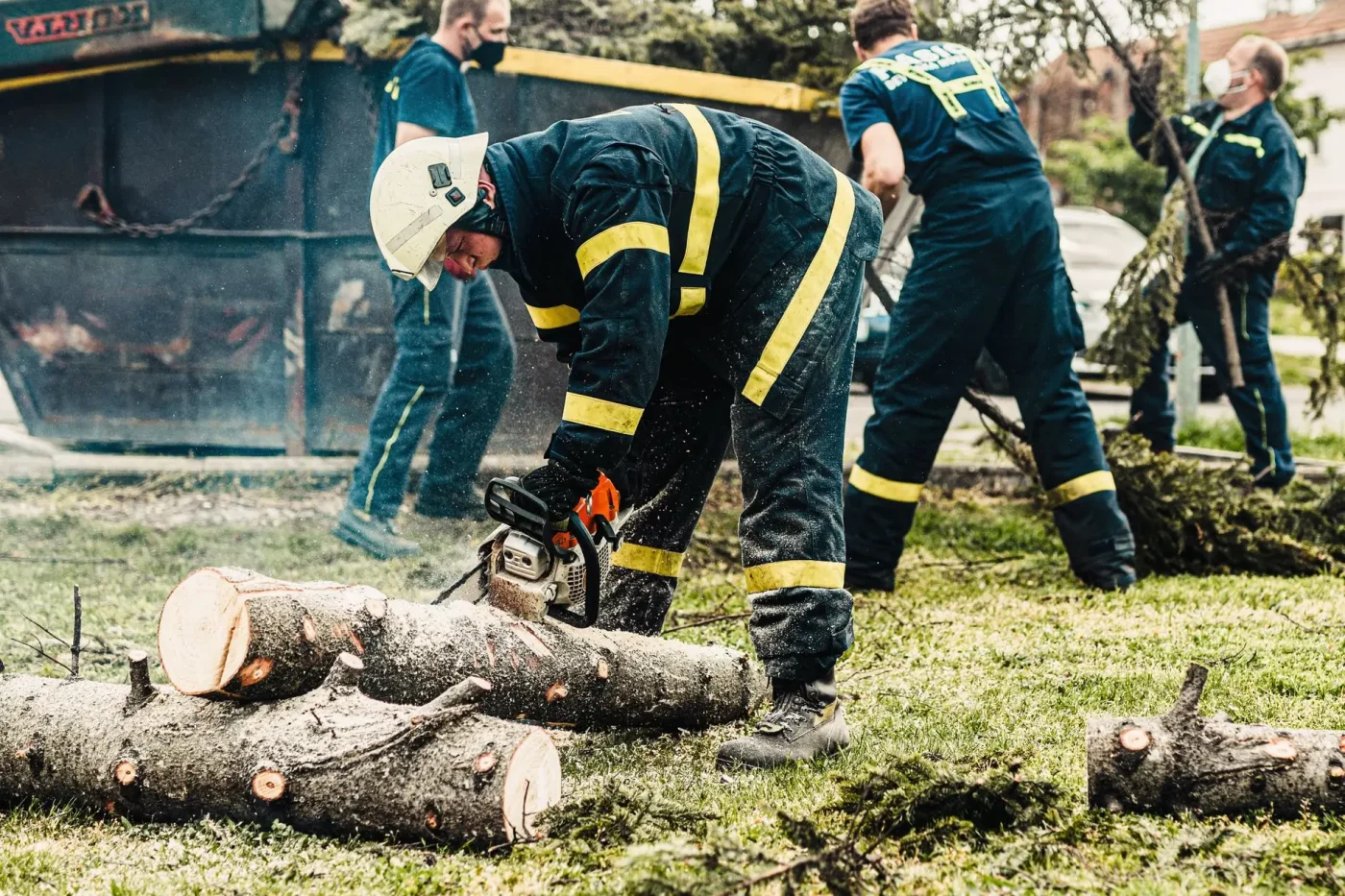
A clearer tree removal scope
Define the project before comparing the price.
These are the questions the written proposal should answer. The exact solution still depends on what is found at the property.
Existing conditions
Record what is there now and what must be protected or repaired.
Scope and materials
Name the work, selections, allowances and exclusions in writing.
Approvals and schedule
Confirm the permit path, sequence and dependencies before work starts.
Licensed Tree Removal Contractor Twin Peaks
A General Contractor Built for Mountain Properties
We’re a full-service general contractor licensed through the California State License Board License #1105333, Class B. We serve San Bernardino County, CA broadly, including the mountain communities along the Rim of the World corridor, and have been featured on KCAL television. That kind of reach matters when you’re a Twin Peaks second-home owner making a hiring decision from your primary residence and you need to trust that the contractor showing up on your property actually knows what they’re doing.
What separates us from a specialty tree crew is scope. The mountain communities between Crestline and Lake Arrowhead are full of older cabin-style properties the kind of homes in the Strawberry Lodge area and along Rim of the World Drive where a single tree event can expose deferred maintenance across the entire exterior. We handle roofing, stucco, fencing, windows, and exterior coating alongside the tree work itself. You don’t have to manage a separate contractor for every problem the tree revealed.
We offer financing for qualifying work, and a 15% Off Coupon applies which matters in a community where the cost of mountain property ownership already runs high.
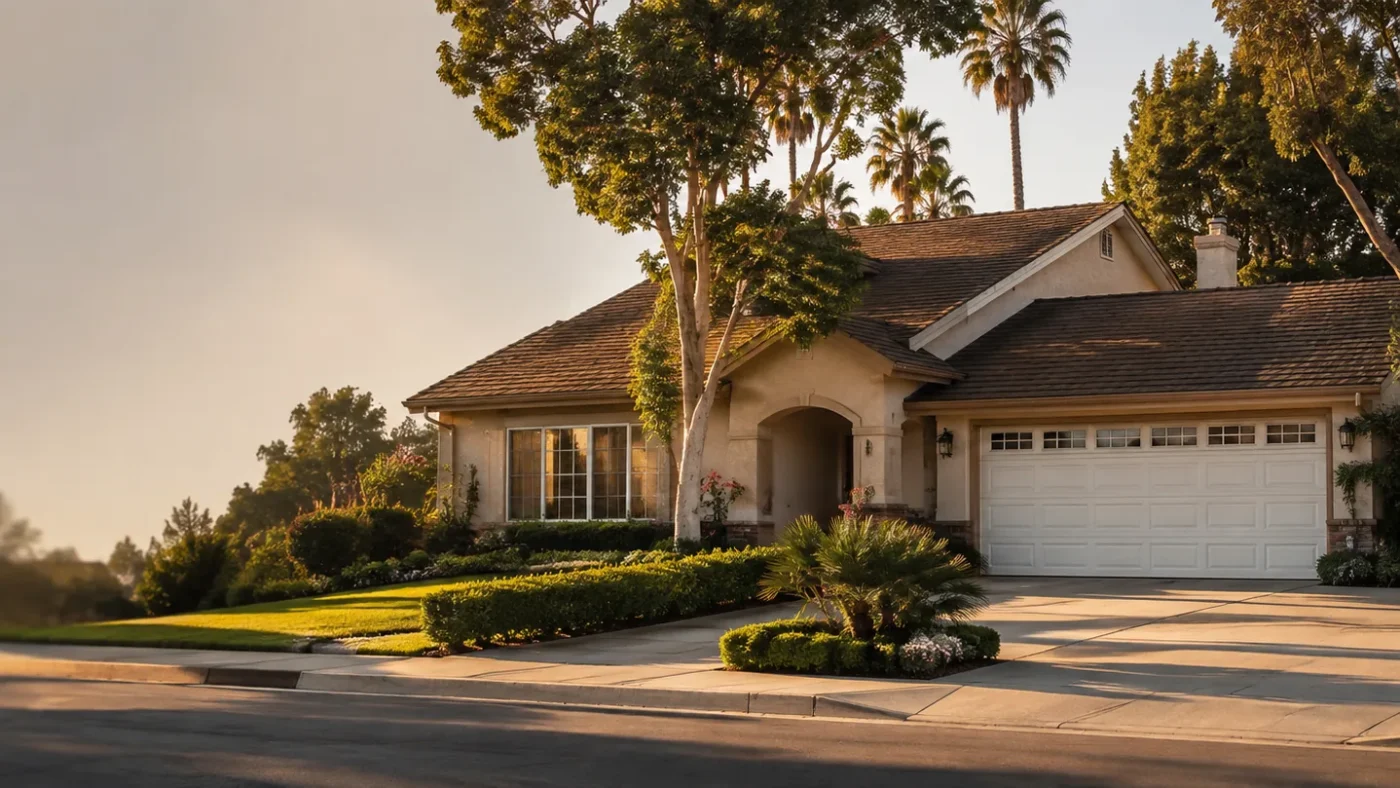
From walkthrough to written scope
Three decisions before construction starts.
- 01
Walk the property.
Review the existing condition, access and the result you want at the actual address.
- 02
Write the scope.
Name the work, materials, exclusions, permit responsibilities and sequence in one document.
- 03
Attach the price.
The estimate belongs to that exact scope, so you can compare the job—not only the number.
Tree Removal Process Twin Peaks, CA
From the First Call to a Clear, Compliant Property
The first step is a free estimate. We assess the tree its size, species, condition, proximity to your structure, and the grade of the lot it’s sitting on. Twin Peaks properties are often steeply graded and heavily wooded, and that affects how removal gets planned. A large ponderosa or Jeffrey pine on a slope with limited vehicle access along a narrow stretch off SR-189 is a different job than a suburban lot removal, and the assessment reflects that reality.
From there, permitting comes next and this is where a lot of homeowners get tripped up. San Bernardino County, CA requires a Native Tree Removal Permit for regulated trees in unincorporated areas like Twin Peaks. A regulated tree is any living native tree with a stem diameter of six inches or more measured four and a half feet above grade. On a typical Twin Peaks lot, most of your mature conifers qualify.
We obtain all necessary permits early, before work begins, so your compliance clock isn’t running while paperwork sits in a queue. Once permits are secured, the removal is scheduled and executed. Cleanup and debris removal are part of the conversation from the start in a dense forest community, leaving debris behind just adds to the fire fuel load the county was already concerned about.
After the tree is down and the lot is cleared, if the removal exposed damage to a fence, a roof section, or exterior stucco, we can assess and address that in the same project cycle.
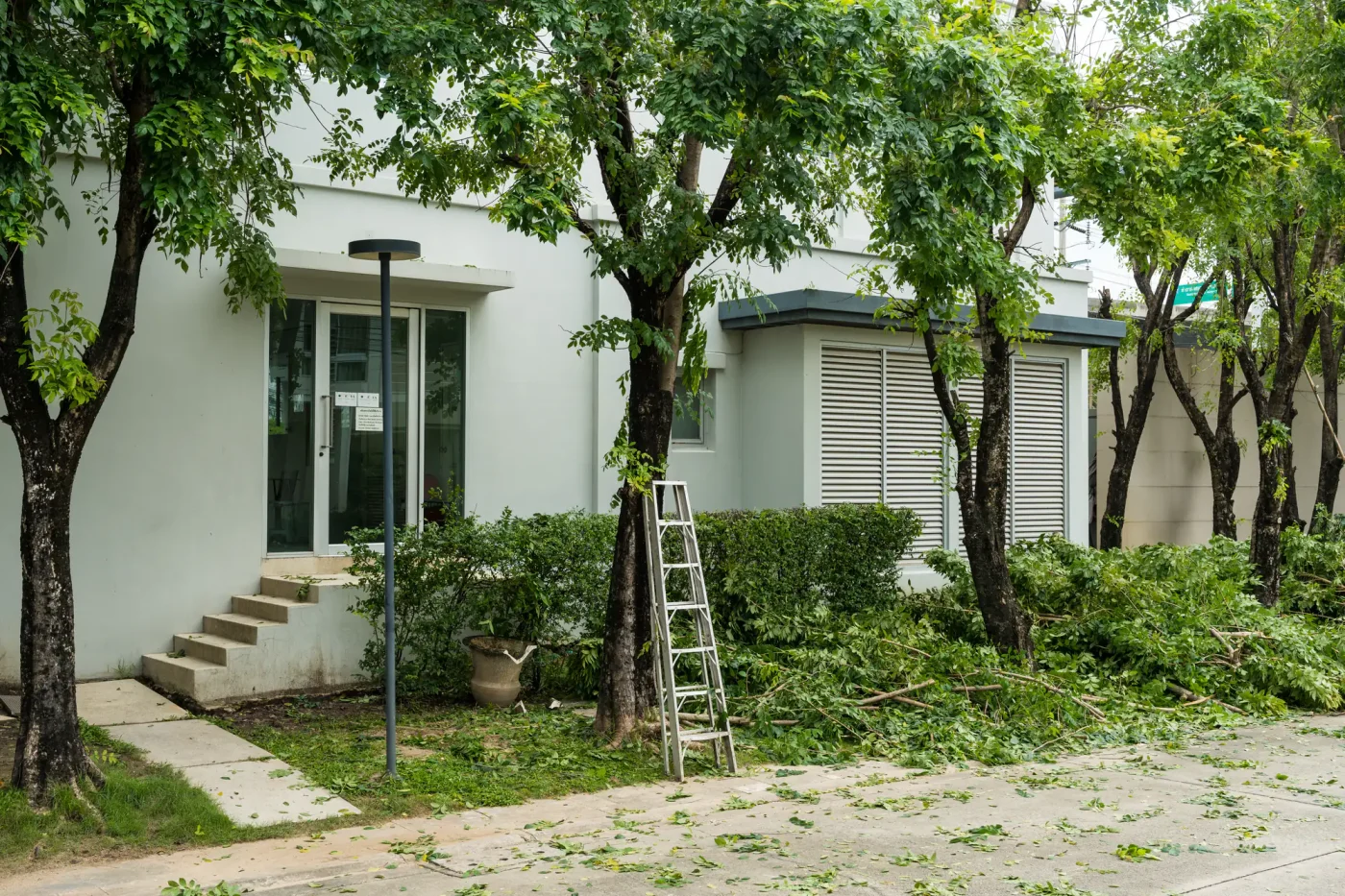
Fire Hazard Tree Removal Twin Peaks, CA
What Tree Removal Actually Covers Up Here
Tree removal in Twin Peaks isn’t the same job it is in a flat suburban neighborhood. The dominant species on most lots ponderosa pine, Jeffrey pine, white fir, incense cedar, black oak are large, mature native conifers that have been under bark beetle pressure since the drought cycles of the early 2000s. A standing dead pine looks like a tree until a wet winter snowstorm or a Santa Ana wind event reminds you it isn’t.
At 5,777 feet, snow loading on weakened branches is a real and recurring failure mechanism, not a theoretical risk. The service scope here accounts for that reality. Removal includes assessment of the tree’s condition and structural risk, coordination of the San Bernardino County, CA native tree removal permit (required for regulated native trees in unincorporated Twin Peaks), the actual felling and sectioning of the tree, and full debris removal from the property.
Stump grinding is part of the conversation leaving a stump in a fire-prone mountain community is both a practical and compliance issue. If the county’s fire abatement inspector is walking your property, a stump surrounded by debris is not going to satisfy the clearance requirement.
For absentee property owners, we design the service to run without requiring your physical presence at every stage. We handle the coordination, the permits, and the work and if the removal reveals exterior damage to the structure that needs attention, that conversation happens in the same project, not weeks later with a different contractor. We offer financing for larger or more complex jobs, and the 15% Off Coupon applies to qualifying work.

Reviews from San Bernardino County homeowners
Every one of them is public, and every one is on Google
None of these are from Twin Peaks specifically, and they are not presented as if they were. They are the whole public record, linked so you can check it.
Steve Cowens
2026-03-11
My wife and I called Jerome directly at Socal Home Improvement. I heard him on KJLH Radio, Station advertising his business. When calling him, he set up an appointment to come out the same day, which was outstanding perfect. I must say on his arrival he was very professional and knew his job very well…
Rewa Cooper
2026-05-15
We recently completed a 6-week renovation with Jerome’s So Cal, and we couldn’t be happier with the results. As with any renovation, there were a few ups and downs along the way, but every concern we brought to their attention was addressed quickly and professionally…
jacqueline wright
2026-03-27
My Jerome’s SoCal Home Improvement experience was great. He remodeled my two bathrooms and I was very pleased and impressed with the outcome. Jerome’s team was amazing. They were punctual, efficient, hard working, courteous, skilled fast and accommodating. They clean behind their work; leaving no mess. His worker came to me at each stage of the progress to ensure I approved the work…
Debra Tucker
2026-03-10
I've worked with Jerome and his staff on two separate occasions. They are very professional and very nice. I had my house painted, windows replaced and a roof. my home is beautiful…
Joseph Ford
2026-03-31
Very reliable and professional company. Communication was clear throughout the project, and the final result was perfect. I highly recommend Jerome's SoCal Home Improvement
Elijah Brooks
2026-03-31
Jerome's SoCal Home Improvement did an amazing job on my house renovation! The team was professional, punctual, and paid attention to every detail. Highly recommended for anyone looking for quality work
Twin Peaks project questions
Useful answers before you request a walkthrough.
Read the complete FAQ →Do I need a permit to remove a tree on my Twin Peaks property?
Yes, in most cases. Twin Peaks is an unincorporated community in San Bernardino County, CA, which means county codes govern tree removal on private property not a city ordinance. Under San Bernardino County, CA’s Chapter 88.01, a Native Tree or Plant Removal Permit is required for any living native tree with a stem diameter of six inches or more, measured four and a half feet above the ground. On a typical Twin Peaks lot covered with mature ponderosa pines, Jeffrey pines, white firs, and incense cedars, the majority of your trees will meet that threshold.
The permit process involves submitting an application to the county, and in some cases, replacement planting may be required as a condition of approval. This is one of the reasons it matters to work with a contractor who understands the local regulatory environment not just someone who shows up with equipment. We obtain all necessary permits before work begins, so the project doesn’t stall while paperwork waits on a desk. If you’re working against a fire abatement compliance deadline, that front-loaded permit approach is the difference between meeting your 30-day window and missing it.
What happens if I ignore a fire hazard abatement notice in Twin Peaks?
Ignoring it creates a compounding problem. San Bernardino County, CA’s Fire Hazard Abatement Program issues notices under County Code §23.0304 and California Public Resources Code §4291, and those notices come with a 30-day compliance window. If you don’t act within that window, the county can issue citations, assess penalties, and ultimately arrange forced abatement where the county hires a contractor to clear your property and bills you for it, often at a premium rate with additional administrative fees on top.
For absentee property owners who received the notice by mail at their primary residence, the 30-day clock starts from the notice date not from when you happen to open the envelope. That’s a real scenario in Twin Peaks, where a meaningful share of cabin and vacation home owners live in the greater Los Angeles area and aren’t monitoring their mountain property week to week. The faster you get a contractor on-site to assess and schedule the work, the more of that 30-day window you’re actually using productively. We can coordinate the assessment and permit process without requiring you to be present at every step.
How do bark beetle-killed trees become a structural hazard on a Twin Peaks lot?
A bark-beetle-killed pine doesn’t fall apart immediately it dries out, the root system loses its grip on the soil, and the structural integrity of the trunk degrades over time. What looks like a tree that’s “always been there” can be significantly compromised internally long before it shows obvious external signs beyond gray, needleless branches. The San Bernardino Mountains have been dealing with bark beetle die-offs since the drought cycles of the late 1990s and early 2000s, and the dead standing timber on private lots in Twin Peaks is one of the primary fuel sources and structural hazards that county fire inspectors are looking for.
The failure mechanism accelerates in winter. At 5,777 feet, Twin Peaks receives real snowfall wet, heavy mountain snow that loads onto already-weakened branches and trunks. A bark-beetle-killed pine that made it through three dry summers can come down in a single snowstorm, and on a steeply graded lot with a structure nearby, where it lands is not predictable. Removing a dead or dying pine before that happens is not optional maintenance it’s risk management. The longer a dead tree stays up on a Twin Peaks property, the more likely it is to take something with it when it finally goes.
Does my homeowners insurance cover tree removal in Twin Peaks?
It depends entirely on the circumstances, and most homeowners are surprised by how narrow the coverage actually is. Standard homeowners insurance will typically cover tree removal only when two conditions are both true: the tree fell because of a covered peril such as a windstorm or ice storm and the tree damaged a covered structure, like your home, garage, or fence. If the tree falls but doesn’t hit anything, most policies won’t pay for removal even if the cause was a covered event.
Preventive removal taking down a dead or bark-beetle-killed pine before it falls is almost never covered by homeowners insurance. That’s the situation most Twin Peaks homeowners are actually dealing with: a standing dead tree that hasn’t fallen yet but clearly needs to come down. In that case, the cost comes out of pocket, which is why we offer financing options so that a necessary removal doesn’t get delayed because the upfront cost isn’t available right now. A dead tree on a steep mountain lot isn’t going to wait for your financial timing to line up.
How much does it cost to remove a large pine tree in the San Bernardino Mountains?
The national average for tree removal runs around $750, but that figure doesn’t fully reflect what large conifer removal looks like in a mountain community like Twin Peaks. Large trees those over 80 feet typically run $1,000 to $2,000 or more. Trees located near power lines or structures can reach significantly higher depending on complexity. Several factors push costs up in the Twin Peaks context specifically: steep lot grades that limit equipment access, the size and species of mature mountain conifers, the distance from the tree to the nearest accessible road off SR-189, and whether stump grinding is included.
The honest answer is that you need an on-site assessment to get an accurate number any quote given without seeing the tree and the lot conditions is a guess. We offer free estimates, so you know what you’re looking at before anyone picks up a tool. If the job involves multiple trees, adjacent exterior damage, or a fire abatement compliance timeline, those factors get incorporated into the estimate upfront. The 15% Off Coupon available through us applies to qualifying work and can make a meaningful difference on larger jobs.
Can a general contractor handle tree removal, or do I need a specialty tree service?
This is one of the most important questions Twin Peaks property owners can ask, and the answer has some nuance. In California, tree removal or pruning work valued at $500 or more or involving trees 15 feet or taller requires a C-49 Tree and Palm Contractor license under CSLB rules that took effect January 1, 2024. That’s the specialty classification that covers tree work specifically. When you’re hiring any contractor for tree removal in Twin Peaks, asking for their CSLB license number and verifying it at cslb.ca.gov takes about 60 seconds and tells you exactly what they’re licensed to do.
Where a licensed general contractor like us provides distinct value is in scope. Most specialty tree crews remove the tree and leave. They don’t assess the roof section the branch landed on, they don’t repair the stucco the trunk grazed on the way down, and they don’t handle the fence that got taken out at the property line. On older Twin Peaks properties the cabin-style homes in the Strawberry Lodge area, the steeper lots along Rim of the World Drive a tree event often exposes a list of exterior issues that needed attention anyway. Having a general contractor involved from the start means those issues get addressed in the same project, not in a separate round of calls and scheduling.
Twin Peaks at a glance
Where Twin Peaks is, and where we are
The offices, conditions and public records a Twin Peaks project touches — and the shop this work is dispatched from, so the distance is not a guess.
- Map Open A Twin Peaks, CA Map
- Post office Find The Twin Peaks, CA USPS
- Pharmacies Locate Nearby Twin Peaks, CA Pharmacies
- Weather View The Current Weather In Twin Peaks, CA
- County and state San Bernardino County, CA California State